
Dooly County Police Blotter Sources
The sheriff's public navigation lists no 72-hour, weekly, or rolling arrest blotter. Nothing close exists officially. The Dooly County Sheriff's Office blog is the nearest thing to a news archive, though it picks its moments. Its arrest-related posts read as narrative releases from 2018. Each one covers a specific incident. They are not a row-by-row, dated account of jail admissions. Nothing signals a set publishing rhythm either.
The News Observer puts out weekly issues for Dooly County communities, while WALB keeps an event-driven news index. Both can preserve a major arrest, a court action, an agency release, or a public-safety story. Neither is a jail roster, though. Someone can be booked without a mention, and a story can outlive a changed charge or custody status.
Read Dooly County Arrest Reports
Think of the sources as separate layers. Match the layer to the question. A current custody question belongs with the jail, while an old sheriff announcement lives in the agency blog. A reported event may surface in a newspaper or television index, and the later charge outcome belongs in the court docket.
- Search the DCSO news archive by subject and date. Confirm that the post is an official release, then note what it actually says.
- Review the News Observer issue PDFs around the incident date. They are weekly and may include court material, legal notices, or a selected agency story.
- Check the WALB Dooly County index for major event-driven reporting. Read the date of the event as well as the update date.
- For a complete or certified record, ask DCSO or the arresting agency for the relevant date range and record type. Identify the person, agency, and incident when known.
- Use the court record to check disposition. A news item or booking line does not show the full result of the case.
A very recent county-jail booking is a different task. The Dooly County Arrests Last 24 Hours page handles it when no same-day web feed exists. The blotter view spans a longer stretch.
Dooly Arrest Report Fields
No standard online row is mandatory here. Dooly County offers no arrest-log interface. The official blog uses narrative posts, and news outlets use story formats. A written booking-record response may hold structured fields, though the exact contents depend on the record and lawful redactions.
| Possible item | How to read it |
|---|---|
| Name or identifying detail | Use it with the event date and agency to reduce mistaken identity. |
| Incident or arrest date | May differ from the booking date or the publication date. |
| Agency | Shows which office reported the event or may hold the incident file. |
| Charges as alleged | Reflects charges at that stage, not a conviction or final count. |
| Custody or bond detail | Describes a point in time and may later change. |
| Court or case reference | Helps locate later filings and disposition. |
| Image | May be an agency, scene, or contributed photo; it should not be assumed to be a booking photograph. |
A sheriff release may omit the bond or booking number. A later release date may go unmentioned too. An agency quote in a news article still covers just one event. Local outlets run no recurring Dooly mugshot gallery. Georgia law limits booking-photo publication as well. Request the exact booking record you need rather than treating an article as the file.
Dooly Weekend Arrest Reports
No weekend, holiday, or Monday catch-up schedule exists for Dooly County arrest reports. The sheriff's office runs around the clock. That does not mean the website posts every intake at a fixed hour. The News Observer's weekly cadence and WALB's event-driven schedule cannot estimate weekend jail admissions either.
A Monday report may describe an earlier incident. A Thursday issue may hold material from prior days. Plenty of bookings never become news at all. Compare the incident date, booking date, story date, and update date. Grouping every post under its posting day misleads.
Need current custody after a weekend? Call the Dooly County Sheriff's Office at (229) 645-0920. Want a multi-day document? Give the request clear start and end dates in writing. The county's recent-arrests and record overview explains which custodian answers jail, court, and state-prison questions.
Note: Weekend jail activity cannot be measured from how many Dooly County stories appear online.
Dooly Arrest Archives and Retention
The DCSO blog holds historical material. No published rule says how long that web archive stays up. Web persistence and government retention are different things. Jail booking records fall under LG-19-060. Georgia's local public-safety schedule keeps them at least ten years after release. Jail registers under LG-19-061 carry a minimum of ten years after the final entry too. Those rules promise retained records. They do not promise a name or photo online.
Request older material by record series. Say whether you want a booking record, jail register, release or transfer entry, incident report, or agency press release. Add an approximate span and identifying detail. Even then, juvenile, sealed, restricted, victim, medical, financial, and active-investigation material may be withheld or redacted.
The Georgia Archives schedule does not send Dooly booking files to the state archive automatically. DCSO or the county comes first. Ask there about any active or inactive local record before going elsewhere. Historic newspaper repositories preserve old reporting. A newspaper copy is not a certified county booking record.
Note: A page can vanish before a retained record expires, while an unofficial copy can outlast an official correction.
Dooly Sheriff Arrest News
The sheriff's own blog gives Dooly County readers the longest official view online. Posts there come straight from the DCSO. What it lacks is structure. There is no booking table, no multi-day arrest window, or roster search. Photos appear on no steady schedule. The historical entries mostly cover Unadilla burglary cases from 2018, not a running county log. The official DCSO news page reads as a selective archive of announcements. Treat it as a supplement rather than a full Dooly County arrest record.
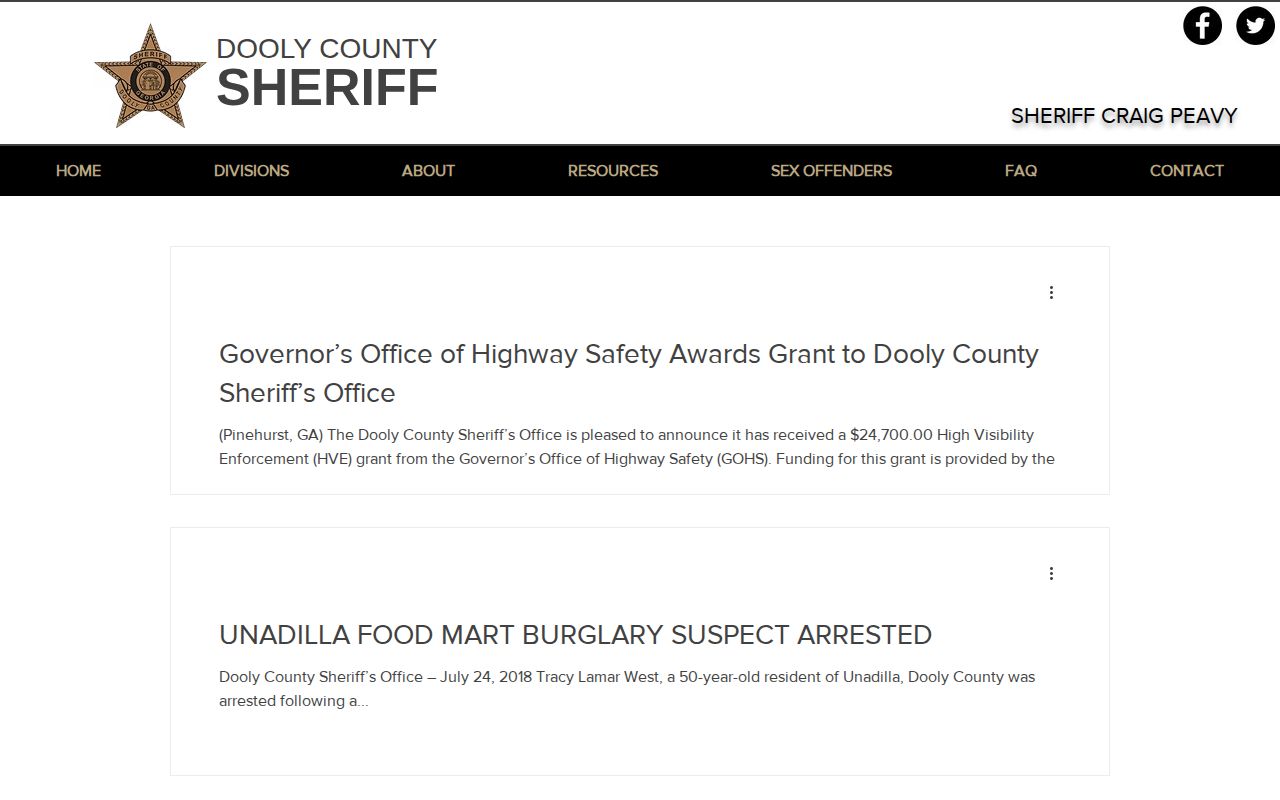
Read each release with care. Words like "arrested," "charged," and "wanted" mark different stages of a case. A warrant simply authorizes an arrest. A later court filing can amend or drop the count. A release from jail settles nothing on its own. The charge itself lives on in court records until the case closes.
Dooly Arrest News Patterns
The News Observer calls itself Dooly County's legal organ. It serves Byromville, Dooling, Lilly, Pinehurst, Unadilla, and Vienna. Its issues run on Thursdays. That points to a weekly rhythm. An issue may carry legal notices, court or grand-jury material, and sheriff reports. The occasional arrest story rounds it out. It carries no recurring booking-photo section and no full arrest list. WALB handles Dooly County news differently. The regional station posts selected stories as events happen. Its reports draw on sheriff, Georgia State Patrol, Georgia Department of Corrections, court, chase, sentencing, and investigation sources. Story images come from agencies or scenes, not necessarily jail photos. The WALB county news index shows this event-driven layer. It skips many a county booking.
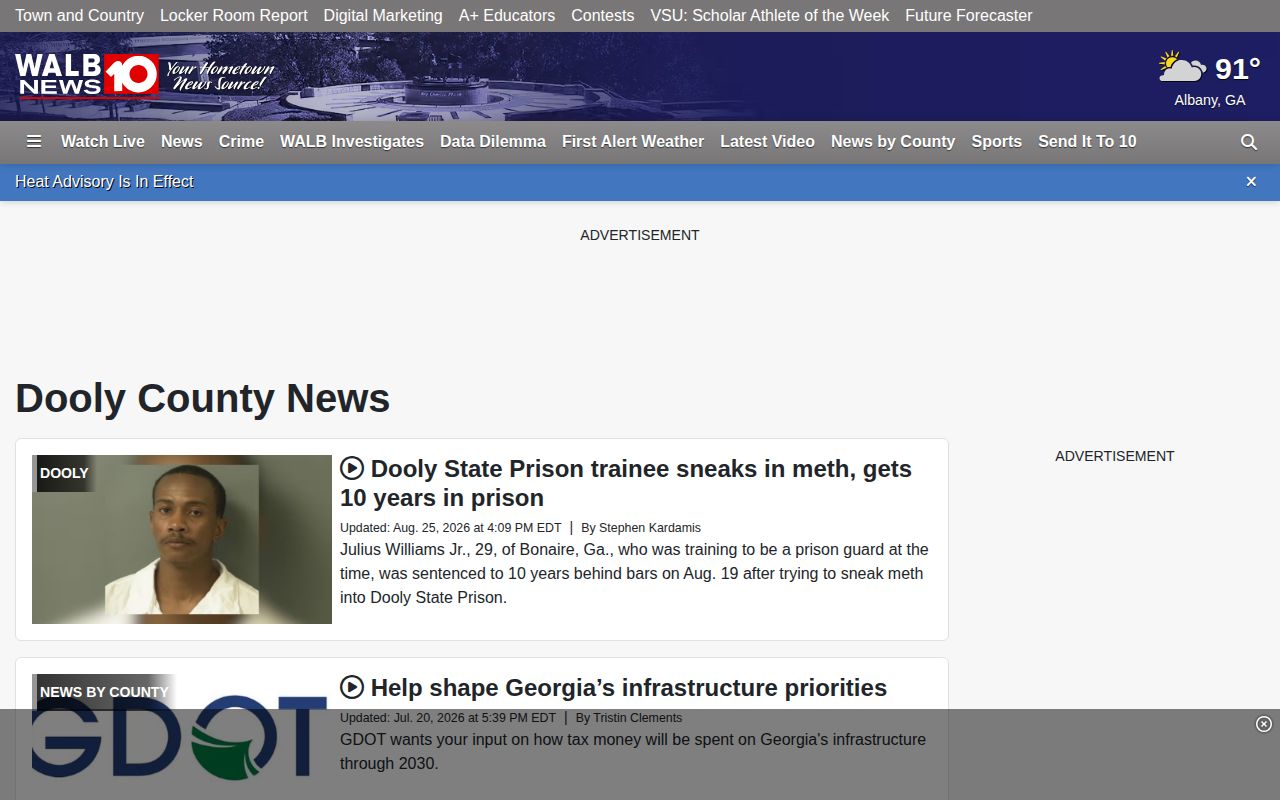
The WALB index can point you to dated reporting on specific arrests. Its selected stories cannot deliver a countywide booking total or anyone's current custody status, so check DCSO directly for that.
Dooly Arrest Aggregator Gaps
Private arrest sites leave the official Dooly County gap unfilled. Busted Newspaper, RecentlyBooked, Mugshots.com, Arrests.org, and Mugshots.zone all list no county-local Dooly section. That pattern is uniform. RecentlyBooked's Georgia index names many counties, yet Dooly is not among them. The Arrests.org Georgia selector lacks a Dooly entry too. A guessed URL proves nothing about a live sheriff feed. Neither does a page borrowing the county name. The RecentlyBooked Georgia index shows that gap plainly, and it is not an official source.
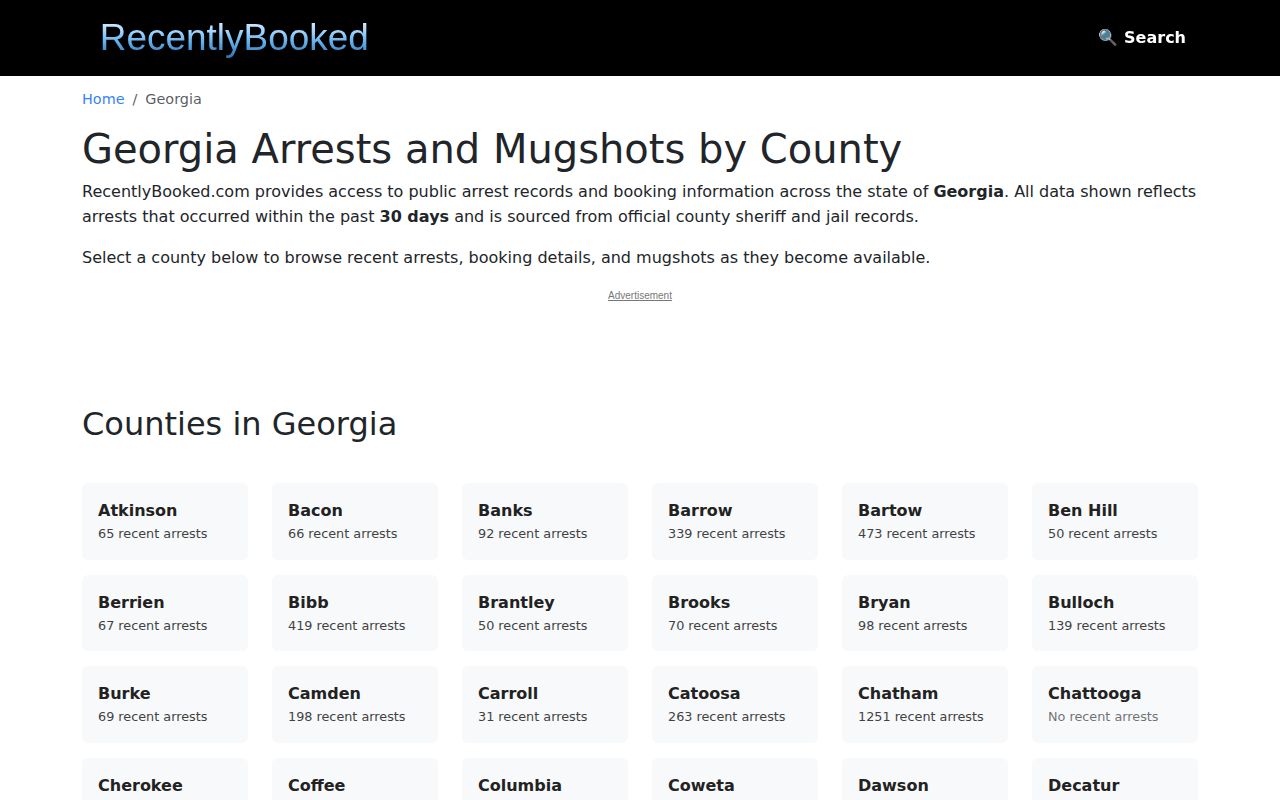
A statewide private index is not a Dooly County arrest log, whatever its label says. Entries can arrive late, run incomplete, duplicate one another, or drift from the court outcome. An old booking photo or charge may linger after an official page updates. Start with official sources. DCSO handles county custody and records. The arresting agency holds the incident report. The court decides how a case ends.
Dooly Arrest Records Need Context
An arrest record is a snapshot from the start of a case. It shows the booking, the arrest charge, the bond, and the agency that made the arrest. It does not trace the whole legal path. Arraignment is where the court formally takes up the charges. Disposition is the final recorded result. Along the way, a prosecutor can change a count, a court can dismiss it, or a person can walk free while the case stays open.
Each custody source answers a different question. Dooly County Jail handles local booking and holds people arrested in the county. Dooly State Prison belongs to the Georgia Department of Corrections and houses sentenced adult men, so it is not a list of recent arrests. News archives cover selected events. Court records track what happened later. Keeping these apart stops an old article from being read as a current jail status.